Why Your Current OpEx Strategies Are Losing You Millions Annually
For too long, operational expenditure (OpEx) management in mid-to-large enterprises has been a reactive discipline. Budgets are set, spent, and then audited, often leading to unpleasant surprises and last-minute cost-cutting measures that impact quality or morale. A recent McKinsey report indicated that organizations focused on reactive cost management typically undershoot their potential savings by 15-25% annually. This isn't just about missing targets; it's about forfeited innovation, delayed market responsiveness, and a persistent drain on your bottom line. Traditional systems, often siloed and reliant on human intervention for analysis, simply cannot keep pace with the velocity of modern business, making true predictive OpEx reduction an elusive goal for many CTOs and VPs of Operations.
The issue isn't a lack of data; it's a lack of intelligent, autonomous data utilization. Your teams are drowning in operational metrics, yet critical insights for foresight remain buried. This translates directly to inefficiencies across procurement, resource allocation, supply chain logistics, and customer support – all areas ripe for autonomous optimization. Without a strategic pivot, this reactive cycle will continue to erode your competitive edge and hinder true enterprise growth.
- Reactive vs. Proactive: Relying on historical data instead of predictive models.
- Siloed Systems: Inability to correlate data across disparate operational functions.
- Manual Bottlenecks: Human-dependent analysis delays decision-making and action.
Download the Predictive OpEx Reduction Blueprint Checklist: Are You Ready for 2027?
The NODYT Blueprint: Orchestrating Autonomous AI Agents for Unrivaled Predictive OpEx
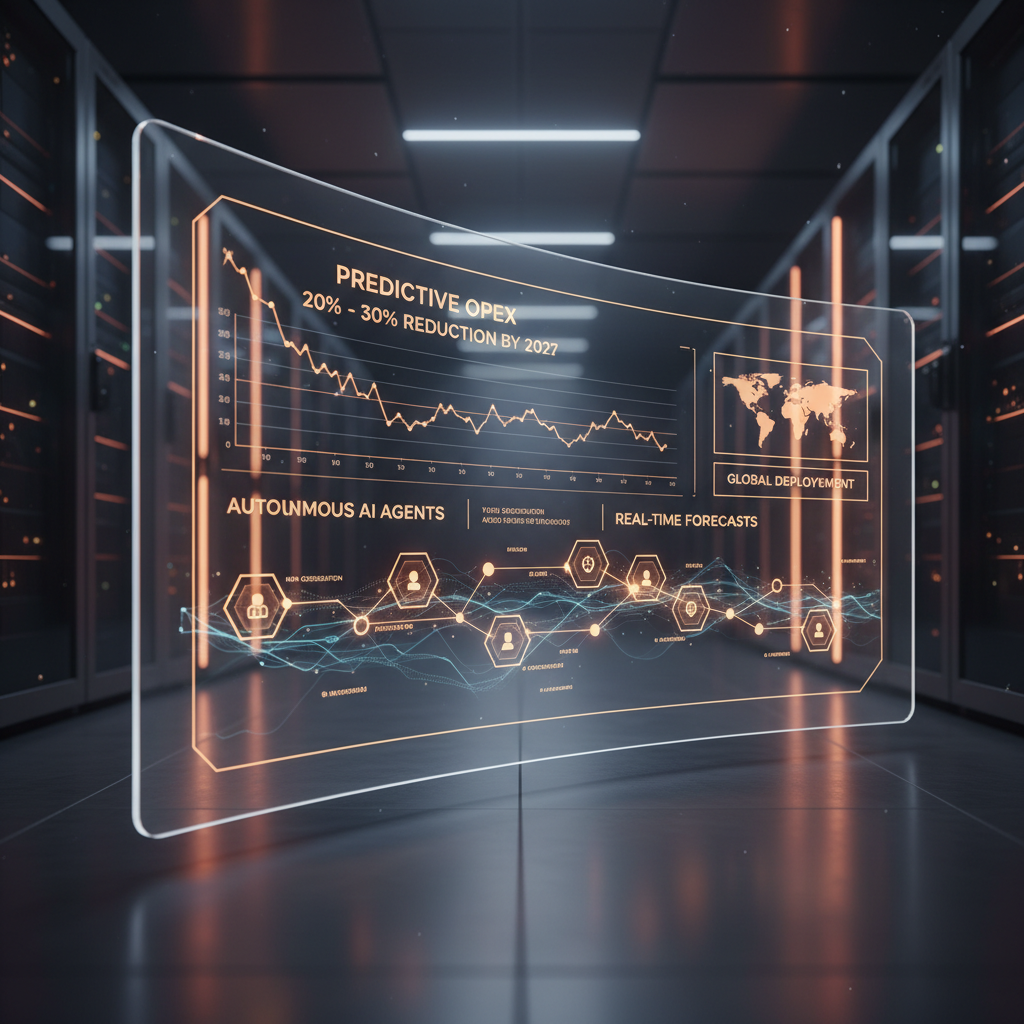
NODYT provides a clear, actionable path to transform your OpEx strategy from reactive to profoundly predictive. Our framework leverages autonomous AI agents, meticulously orchestrated with n8n, to anticipate and mitigate operational costs before they materialize. This isn't theoretical; we're seeing clients achieve a verifiable 20-30% reduction in OpEx by moving to this autonomous model. By integrating advanced AI models (like OpenAI's latest offerings) with robust orchestration platforms such as n8n, we create self-optimizing ecosystems that continually refine processes, reallocate resources, and forecast expenditure with unprecedented accuracy.
Our approach is not about replacing human decision-makers but augmenting them with an intelligent, self-correcting operational layer. The synergy between n8n's workflow automation capabilities and bespoke Python agents allows for highly customizable, enterprise-grade solutions that directly target your unique operational inefficiencies.
Want to understand how we achieved 25%+ predictive OpEx reduction with other clients? Explore our insights on orchestrating autonomous AI agents with n8n for OpEx reduction.
Phase 1: Intelligent Data Ingestion & Predictive Modeling
The foundation of predictive OpEx is a clean, comprehensive, and continuously updated data stream. We implement robust connectors using n8n to ingest data from every relevant system – ERPs, CRMs, IoT sensors, financial ledgers, and even external market indicators. This data feeds custom-trained AI models, developed in Python, that identify patterns, predict future demand, and forecast operational costs. The goal is to move beyond simple trend analysis to genuine foresight, flagging potential cost overruns weeks or months in advance.
- Unified Data Landscape: Consolidating data from disparate sources.
- Advanced Forecasting: Utilizing ML models for accurate OpEx prediction.
- Anomaly Detection: Proactive identification of deviations before they become problems.
Phase 2: Design & Deployment of Self-Optimizing Agent Networks
With predictive insights established, autonomous agents take over the execution. Designed for specific operational domains, these agents leverage n8n's workflow automation to act on predictions. For example, an agent might dynamically adjust inventory levels based on forecasted demand fluctuations, or re-route customer support inquiries to optimize agent load and reduce SLA breaches. The agents are empowered with defined parameters to make decisions, execute tasks, and even learn from their outcomes, minimizing human intervention while maximizing efficiency.
Our expertise in autonomous agent development ensures these systems are not just automated but truly intelligent, capable of navigating complex B2B scenarios. Learn more about how n8n autonomous agents achieve 30-45% operational agility.
Phase 3: Continuous Learning, Adaptation, and Real-Time ROI Validation
The NODYT framework is not a set-and-forget solution. Autonomous agents are built with feedback loops, allowing them to continuously learn from new data and adapt to changing business conditions or market dynamics. This iterative optimization ensures sustained OpEx reduction and improved accuracy over time. Real-time dashboards, built on top of n8n's monitoring capabilities, provide CTOs and VPs of Ops with complete visibility into performance metrics and verifiable ROI, proving the tangible impact of AI automation on your bottom line. Transparency and measurable results are paramount.
The continuous refinement of these agents redefines operational efficiency, leading to the 20-40% OpEx reduction benchmarks we see with our B2B clients. Dive deeper into how autonomous AI agents are redefining B2B operations.
Schedule a Deep-Dive with NODYT into Our AI Automation Framework.
Case Study: A Mid-Market Manufacturer's 28% OpEx Reduction in 12 Months
A manufacturing client, grappling with unpredictable inventory costs and fluctuating production demands, approached NODYT seeking a proactive solution. Their existing system led to frequent overstocking of certain components (tying up capital) and understocking of others (leading to production delays). Our team deployed a custom n8n-orchestrated autonomous agent network, integrating their ERP, supply chain data, and external market signals. The agents were tasked with dynamically adjusting procurement orders and optimizing production schedules.
Within six months, they saw a 15% reduction in inventory holding costs and a 10% improvement in production throughput. After a full year, the manufacturer reported an overall 28% reduction in their total operational expenditure, translating to millions in savings annually. This was achieved through precise demand forecasting, automated procurement, and a significant decrease in expedited shipping fees. Their predictive accuracy for component needs improved by over 35%, virtually eliminating stock-outs and excess inventory issues. This is not anecdotal; this is the measurable impact of strategic AI automation.
Ready to quantify your potential savings? Request a Custom OpEx Reduction Audit from NODYT.